


Interviews - Assistant Professor Alice Gorman

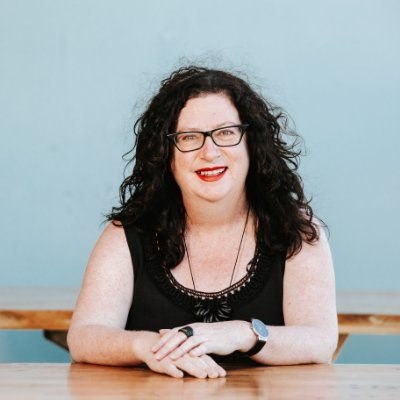
Credit: Daniel Kucek
Welcome back to all our Cellfie family, we have missed you! We hope you are enjoying all the content that the Cellfie Team has been working hard to produce and are excited for more! Make sure to stay tuned and follow our social media @cellfiemagazine on Twitter, TikTok and Instagram as we have a GIANT interview coming up with the CEO of Stemettes! Today, we have had the honour of interviewing Assistant Professor Alice Gorman who is a space archaeologist and is currently working with the office for outer space affairs. You can find Alice on Twitter @drspacejunk. Thank you so much for helping us with this, Alice!
Cellfie: When did you first realize you wanted to do STEM?
Alice: As long as I can remember, I’ve been fascinated by the stars
and galaxies. I’ve always wanted to be a scientist.
Cellfie: We definitely think some our our earliest STEM experiences include watching solar eclipses at school and stargazing with family at night!
Who were your role models growing up?
Alice: My role models were from books and comics. They weren’t
scientists – they were women of action. Yvette d’Alembert was
a circus performer and galactic secret agent in the Family
d’Alembert series of novels. I read them over and over again!
And every week I would read the Modesty Blaise comic strip in
the newspaper. She fought crime and corruption and was
glamorous when she wanted to be, and compassionate when
she needed to be. Following these fictional women, I aspired to
be strong and smart, and not afraid of a fight.
Cellfie: That's amazing! I've actually never read a comic but anything with strong women in is bound to be awesome!
Did you ever want to do anything else?
Alice: My ambitions were to be an astrophysicist or an archaeologist. I
never wanted to do anything else. Now I’m a space
archaeologist, which is the best of both worlds.
Cellfie: One of our founders wants to be an astrophysicist and space archaeology sounds fascinating!
Have you ever had any setbacks or been told you are a woman so can’t do STEM?
Alice: At school I excelled at science. But no-one ever suggested that I
should be an engineer – a common expectation for boys who
are interested in science. And when I didn’t get a stellar mark in
physics, that was kind of the end of it – there wasn’t a lot of
encouragement to go on in this area. It's pretty clear from
talking to male colleagues that this wasn’t the case for them.
Fortunately, there are many ways to get involved in space so I
made my way back into this field through archaeology and
heritage.
Cellfie: Definitely! Sometimes there can be such a double standard in expectations and assumptions made about boys and girls wanting to go into STEM. It is vital that teachers treat their student equally, setting them up for the adult world which should be a meritocracy.
What’s one thing you’d like to change about the STEM community?
Alice: I'd like them to pay more attention to humanities and social
sciences – it’s so important to understand where our
knowledge comes from and what its social context is.
Cellfie: Totally! Science and arts/humanities can definitely co-exist and work together. For example, a doctor needs to know how to write, communicate and lead well, as well as knowing their anatomy. Science journalists and writers are so important in the STEM community as they are the ones who communicate scientific finding and educate the public.
Is there a problem with sexism in the STEM community?
Alice: We still have high profile scientists coming out and saying that
women are just interested in different things – usually biology
and human sciences – and you can bet for every one that says
this out loud, there’s a dozen who think it but don’t say it.
When these people are supervising your research, or
interviewing you for a job, that has an impact.
It's really annoying to have men assume you are admin staff
meant to make them coffee, rather than a fellow scientist. This
has happened quite a few times to me! It means you’re starting
on the back foot all the time.
Cellfie: That is disgusting. We totally abhor the idea of making assumptions based on gender and women can do any field they put their mind to!
What’s your message for young girls wanting to do STEM?
Alice: Find your community – the people who take you seriously,
listen to your ideas, and who will support you.
Cellfie: That is such a good message. If you are not respected, don't put up with it. FInd somewhere that will appreciate your talents and skills.
What is your favourite science joke?
Alice: My favourite science joke is actually a limerick.
There was a young lady named Bright
Whose speed was far faster than light
She set out one day
In a relative way
And arrived on the previous night
Cellfie: We absolutely love this! It is so unique and one we have never heard before!
What was the most embarrassing moment in your life?
Alice: Too many to mention! But nothing I feel comfortable sharing so
you’ll just have to speculate.
Cellfie: It's so important to be able to voice your opinion and say when you're not comfortable sharing or doing something! Some things are just too personal to share!
What is your favourite food?
Alice: It’s really hard to go past a crisp and gooey pavlova with cream
and strawberries. Always a classic.
Cellfie: Oooo! You're making us hungry! Eton mess is just fabulous and pretty much anything with strawberries and cream is a winner! :)
What do you hope to achieve during your new appointment as a mentor for the UN Office of Outer Space Affairs?
Alice: I’m part of a network of mentors who are working to increase
the participation of women and girls in space. My aim is to
inspire people to get involved in any way that suits them – not
everyone has to be an aerospace engineer to make a
contribution. But if you do want to be an aerospace engineer,
I’m here for you too!
Cellfie: That is so amazing! We have heard of STEM mentors but would have never thought of them if not for doing interviews such as this! The scheme sounds so helpful, especially to young girls that are maybe less confident in what they want to do in STEM and could really benefit by expert guidance they may not be offered at school.
What was the best moment in your career?
Alice: In 2019 I published my first book, Dr Space Junk vs the Universe:
Archaeology and the Future. It was such a thrill to see the
paperback with my name on the cover.
Cellfie: We can imagine! That is something to be so proud of; from what we've heard, the writing and book publishing market is so hard to succeed in!
What is your most proud achievement?
Alice: I’m regularly contacted by journalists all over the world to
provide comments about space events – it might be a
spacecraft launch, or a new development in international space
policy. From starting life as a country girl on a farm in Australia,
to being someone whose opinion is asked about world affairs –
that is something I’m very proud of.
Cellfie: Wow! Space is such a diverse area as it brings together so many areas from human science to physics to communication. So many people are interested in it, even if they have no scientific background which means there are so many opportunities for books, film and reporting on it!
What’s it like working with the Office of Outer Space Affairs?
Alice: Something I’ve realised since getting involved with the
Space4Women programme is that the United Nations isn’t
some unreachable place filled with people you can’t talk to. You
just have to get involved. For your readers, I can recommend
joining the UN-sponsored Space Generation Advisory Council
for students and young professionals. It's a great way to meet
people and feel like you can make a difference to the future
direction of space industry.
Cellfie: It must be so amazing to work with such influential people. We agree, the UN sounds extremely important and something you wouldn't necessarily think of linking to STEM.
Who has been your biggest supporter during your STEM career?
Alice: My mother Tish has always supported everything I’ve aspired
to, no matter how out there it seemed. I was also very lucky to
acquire a mentor early in my space career. Brett Biddington is a
highly respected space analyst, and took me under his wing –
I’ll forever be so grateful that he could see the value in my
work.
Cellfie: That's so lovely to hear. Sometimes having someone there to advise you and motivate you is the best thing possible.
What is the main thing you hope the STEM community will have achieved by 2050?
Alice: I hope it will be no more unusual for a woman to be an
astrophysicist or mathematician than an accountant or a nurse.
Cellfie: That is our dream to! Recently, we read an article and it began with a story. A father and son are in a car accident and the father dies at the scene. His son is rushed to hospital and taken into surgery. The surgeon says, "I cannot operate on this boy, he is my son." How can this be? It is because the surgeon is his mother. Most people's first thought of a surgeon is a middle aged man and we are adamant about breaking stereotypes such as this.
What excites you most about space exploration?
Alice: It’s getting outside our planet and feeling part of the solar
system, and beyond that, the galaxy. I feel a strong connection
to the Voyager 1 and 2 deep space probes, who left Earth the
year I started high school and are now travelling through
interstellar space. They extend the reach of human senses and
consciousness. They make us bigger than ourselves.
Cellfie: Definitely! It's such an amazing thing to think that one day everyone may be able to go to space on commercial flights.
What do you think will be the next revolutionary moment in space exploration?
Alice: No-one has set foot on the Moon for 50 years, but in the next
decade there will be astronauts back on the Moon – and maybe
a woman this time. Permanent habitats are being planned on
the Moon and Mars. I think this will radically change how we
engage with space.
Cellfie: That would be so exciting! We hope that there is another big event in our life times!
Did you ever consider being an astronaut? If so, why didn’t you?
Alice: I didn’t – because Australians had to become US or European
citizens to gain access to a human spaceflight programme. But I
was actually more ambitious than that. I wanted to be the
commander of a galactic battle fleet.
Cellfie: That's so unfortuntate, we do agree that commander is much cooler though! :)
Once again, thank you so much for reading and we hope you have enjoying exploring Alice's answers. Make sure to leave a like and comment and get active on our social media @cellfiemagazine on Twitter, Instagram and TikTok. Thanks again to Alice for taking part!


Comments